Progressive House: Scene Updates & Weekly Digest

TL;DR
A weekly digest gathering progressive house releases, DJ mixes, labels and playlists, showing where to listen, build playlist routines, and grow Spotify follows efficiently.
Progressive house news moves fast, and most of it lives where the music actually drops: label feeds, DJ mixes, Spotify playlists, Beatport and Bandcamp. This weekly digest is built for listeners who want progressive house news today in a clear, reliable stream, so you can discover great melodic house quickly and turn updates into playlists you’ll actually play.
Quick snapshot: Progressive house news today
- New releases: several established progressive/melodic imprints roll out seasonal EPs and VA samplers — check Beatport label pages and Bandcamp for early previews and extended mixes.
- DJ mixes: flagship label shows and guest mixes add fresh IDs this week; look at podcasts and Mixcloud for hour‑plus sets with tracklists posted soon after.
- Podcasts: long‑running series push new episodes with a melodic house tilt; scan descriptions for BPM and a list of featured artists before you listen.
- Festival updates: boutique and coastal festivals announce next‑wave lineups; progressive house appears across sunset and closing slots — search official festival channels for the newest day‑by‑day grids.
- Reddit chatter: community threads summarize standout progressive tracks and speculate on IDs; treat Reddit as UGC and verify against label or artist sources.
- Bandcamp exclusives: a handful of EPs appear as early downloads or pre‑orders; use label pages and artist wishlists to catch limited‑run or exclusive versions.
- Reissue and classic nods: modern remasters and retro‑flavored remixes resurface longform progressive motifs; you’ll spot these on Beatport genre charts.
- Scene notes: cross‑pollination with melodic techno continues — longer builds, padded chords and patient basslines dominate this week’s deeper picks.
Why progressive house news matters for listeners
Progressive house news isn’t just trivia — it’s a fast route to music you’ll actually replay. Here’s why it helps listeners right away:
- Fresh playlists with confidence: weekly news points you to brand‑new releases and DJ mixes, so you can stack melodic house selections without guesswork.
- Better transitions: when you follow updates, you’ll track BPM, key center, and arrangement trends — your queue or private mixes flow more naturally.
- Smarter discovery and Spotify follow: news trains your ear to spot artists worth a Spotify follow and a library save, so Release Radar and Discover Weekly start working for you.
In my experience as a working producer/DJ since 2016, news drives most of the tracks I keep returning to. I program sets by energy arc: warm‑up, ascent, plateau, and release. When you skim the right updates weekly, you’ll always have a few new mid‑tempo builders and one or two late‑set lifters ready for your own listening flow.
What progressive house sounds like now (style, tempo, production)
Today’s progressive house favors patient movement, groove you can live inside, and melodies that evolve without rushing. Expect:
- BPM: commonly 120–126, with many sweet‑spot tracks in the 122–125 range. Warm‑ups can dip to 118–120; peak hours might touch 126–128 if the track leans techy or trance‑influenced.
- Structure: long intros and outros for mixing, two or three main builds, a restrained break, then a return to groove. “Extended mix” versions often add 60–90 seconds of DJ‑friendly lead‑in and outro.
- Palette: pads for width and mood; arps that cycle and bloom; supportive bass that moves in phrases rather than big jumps; percussion accents that shift gradually.
- Builds: long builds that cue tension without huge drops. Expect automation sweeps, filter rides, and layered textures instead of abrupt stop‑and‑go edits.
- Crossover: the line between melodic house and melodic techno is porous. Tracks with softer transients and more chordal pads feel closer to melodic house; darker timbres, minor‑key bass movement, and rigid percussion push toward melodic techno. Many progressive house releases sit in the middle: balanced warmth, steady swing, and melodic focus.
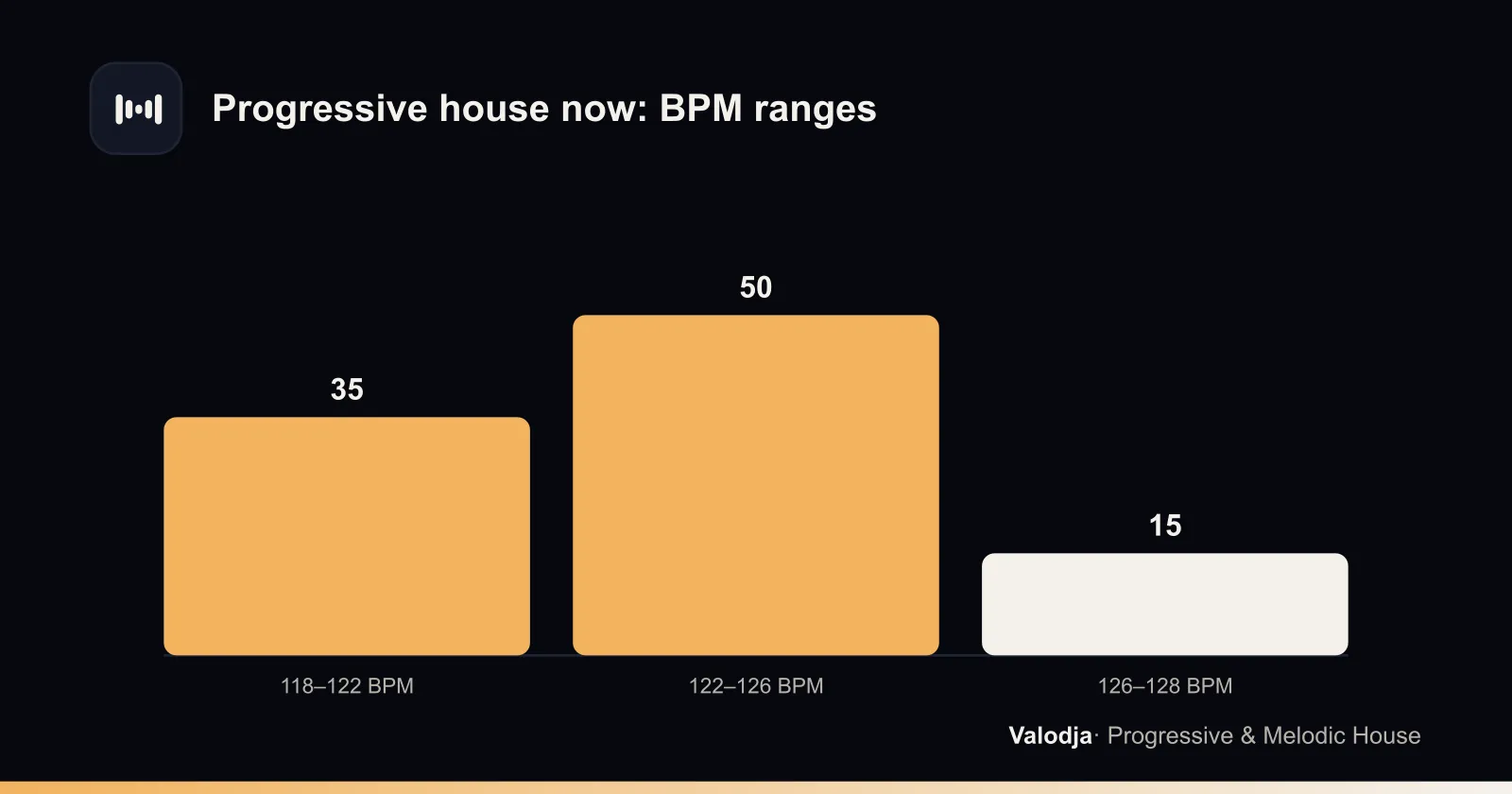
As a DJ, I group tracks by tempo bands and shade them by key and energy. For example, a 123 BPM pad‑forward builder can melt into a 124 BPM arp‑driven tune if their keys are compatible and both use medium‑length builds. That kind of pacing is why progressive house stays addictive for long listening.
A short timeline: progressive house to modern melodic scenes
- Early foundations (history): progressive ideas arrived in the early 1990s with extended, evolving arrangements and deeper harmonies. The UK’s Renaissance era framed the sound around long blends and arc‑based programming.
- British momentum: Renaissance‑affiliated DJs and labels emphasized storytelling across club nights and mix albums. A focus on patience, groove, and melody stuck, and the sequencing mindset matured.
- Frankfurt schools: Eye Q and Harthouse carried hypnotic, trance‑tinged progressions — tight kicks, layered pads, and wide stereo imaging — that bled into progressive house and informed how breaks and builds behaved.
- Goa and trance branches: Goa and trance pushed ecstatic builds and longer journeys, feeding back into progressive arrangements. You can still hear trance DNA in modern progressive house arps and step‑sequenced bass movement.
- Modern melodic blend: today, melodic house and melodic techno share tools — lush pads, long builds, elegant bass phrasing. Progressive house occupies the narrative middle: groove‑first, melody‑rich, and built for seamless mixing.
Where to listen right now — playlists, podcasts, mixes
If you want progressive house news today, focus on three funnels: Spotify playlists, podcast/DJ mix ecosystems, and Bandcamp or SoundCloud drops. Keep your routine simple and repeatable.
Spotify playlists & following strategy
The fastest route to reliable new tracks is a tight follow and save workflow inside Spotify.
- Use algorithmic discovery, but seed it: save tracks you truly like and follow artists you want more of. This improves Release Radar and Discover Weekly within a few weeks.
- Follow label and curator playlists: labels often maintain a current highlights list, while trusted curators keep melodic progressive lanes clean of out‑of‑scope bangers.
- Build two personal lists: a “Shortlist – Prog” for weekly testing and a “Keepers – Prog” for tracks you know you’ll replay. Move tracks after two or three listens.
- Check credits and versions: extended mixes are worth it for better intros/outros. When you save a track, look for an extended version on the artist or label page.
- Convert listening to action: when something lands, hit save, add to your “Keepers – Prog,” and follow the artist. A quick follow means future releases land in Release Radar automatically.
Pro tip: when a playlist description mentions BPM or a mixing context, note it. That hint helps you place the track in your own queues later.
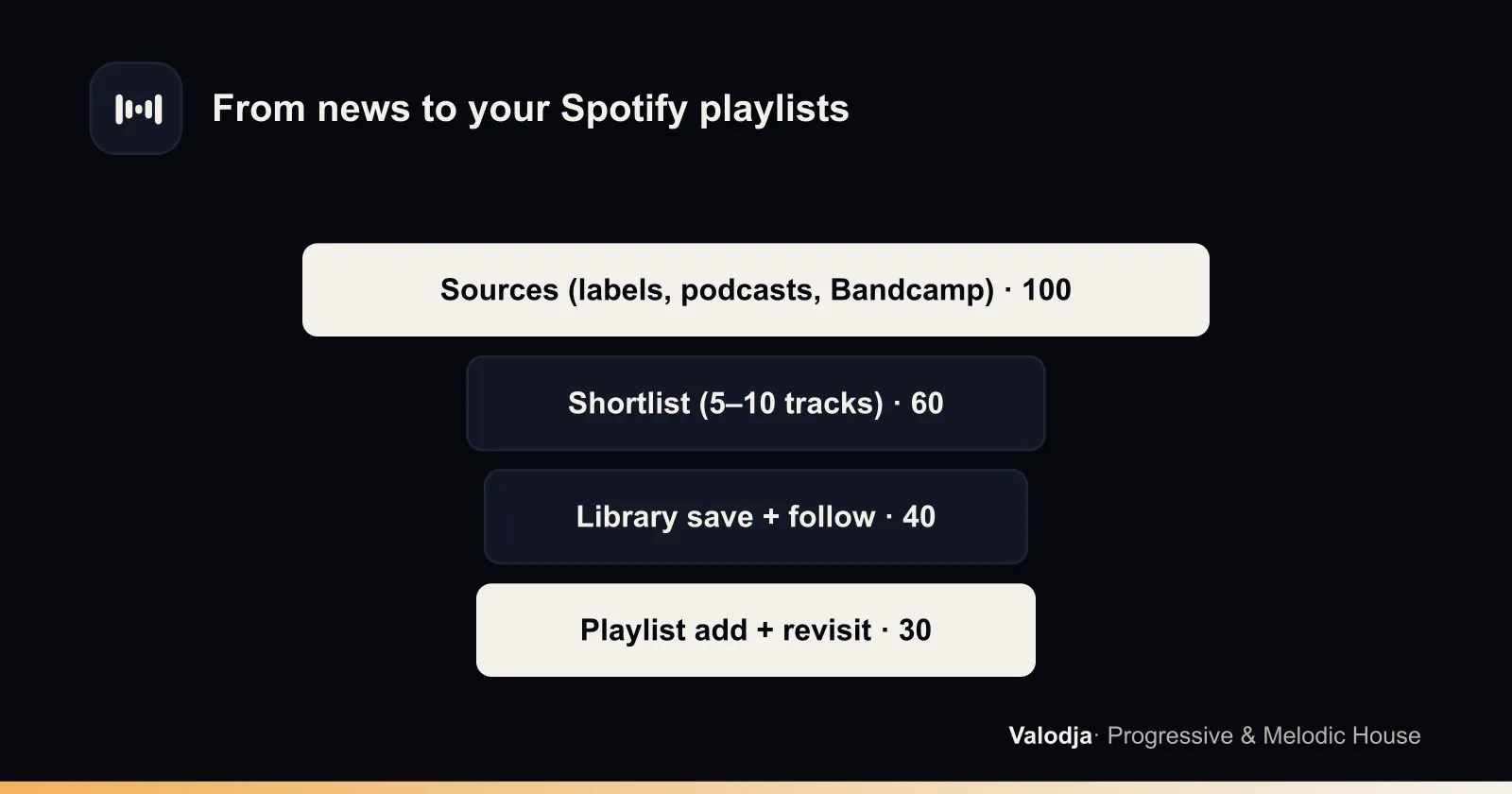
You’ll also see an embedded playlist here during publication. That curated set leans toward melodic progressive you can live with daily; follow it if you want a stable feed of fresh music.
Podcasts, DJ mixes and YouTube sets to check weekly
Podcasts and longform DJ mixes are where IDs and promos surface first. Types that consistently deliver:
- Label podcasts: official label shows often preview upcoming releases and remixes. Their hosts usually mix unreleased material with recent catalog.
- Resident radio and specialty stations: NTS and other specialty shows run deep features that span progressive house, melodic house, and adjacent breaks. Check recent episode descriptions for tracklists.
- Beatport and curated podcasts: genre‑tagged mix series focus on new store arrivals, often with clear attributions to labels and artists.
- Guest mixes on Mixcloud and YouTube: many artists publish hour‑plus sets with time stamps. Scrub the middle third for fresh IDs that feel current but still playable.
How to subscribe and scan quickly:
- Subscribe inside your podcast app of choice for label shows you trust. Download offline for commutes so the habit sticks.
- On YouTube, use Watch Later for sets you actually plan to hear end‑to‑end. Time stamps and pinned comments help you jump to standout sections.
- For DJ mixes, look for tracklists in descriptions or comments. If absent, listen for pads, arps, and arrangement cues that signal progressive builds, then cross‑check on Beatport or label pages.
Bandcamp, SoundCloud and direct label drops
Bandcamp and SoundCloud still surface exclusives and early listens you won’t see elsewhere right away.
- Bandcamp: follow label and artist pages to catch exclusive versions, lossless downloads, and pre‑orders. Use the wishlist to mark interesting EPs you’ll revisit on release day.
- SoundCloud: many producers test demos or post B‑sides around release windows. Follow label accounts and keep an ear out for extended edits.
- Direct label drops: some labels announce new releases first on their own sites or socials. Verify details there before you add things to playlists.
Search tips:
- Use Bandcamp tags like “progressive house,” “melodic house” and related micro‑tags. Sort by new arrivals weekly.
- On SoundCloud, combine genre tags with the label or artist name, then filter for recent uploads.
- For pre‑orders, note the digital release date and whether the full track is streamable before street date.
Key labels, imprints and where they send news
Here are labels that regularly orbit progressive and melodic house, plus where their news usually appears. Profiles indicate what to expect; always verify specifics on primary channels.
| Label | Label profiles (style focus) | Where news lives (typical) |
|---|---|---|
| Anjunadeep | Melodic progressive, warm pads, vocal and instrumental releases | Official site/newsletter, Beatport label page, Bandcamp, socials |
| Bedrock Records | Classic UK progressive house, tech‑tinged builders | Official site/newsletter, Beatport label page, socials |
| Lost & Found | Deep, emotive progressive with longform arcs | Beatport label page, official announcements, socials |
| Sudbeat | Melodic progressive with global flavors and steady builds | Beatport label page, socials, occasional Bandcamp appearances |
| This Never Happened | Melodic house and progressive‑leaning atmospheric cuts | Official site/newsletter, Beatport label page, socials |
| Zerothree | Peak‑time progressive house with modern sheen | Beatport label page, socials |
| Monstercat Silk (Silk) | Uplifting progressive and melodic house with polished mixing‑friendly versions | Official site/newsletter, Beatport label page, Bandcamp |
| Proton Music (and imprints) | Broad progressive spectrum, from deep warm‑ups to club drivers | Beatport label page, Proton channels, socials |
| All Day I Dream | Organic/melodic house with extended arrangements | Official site/newsletter, Bandcamp, socials |
| Katermukke | Melodic/deep crossover, quirky but mixable | Bandcamp, Beatport label page, socials |
| JOOF Recordings | Progressive meets trance‑influenced journeys | Official site/newsletter, Beatport label page, socials |
| Colorize | Melodic house and chilled progressive tools | Official site/newsletter, Beatport label page, Bandcamp |
How to use this table: pick three labels you like, follow them on your streaming service, then check their Beatport and Bandcamp pages each Friday to fill your weekly shortlist.
Notable recent releases and how to read a release announcement
A solid press release or store description quietly tells you if a track belongs in your queue. Read it like a DJ: style clues, versions, context. Below are common announcement archetypes and how to react.
| Release archetype | What the press release says | How to read | What to do |
|---|---|---|---|
| Artist EP with extended mix | Mentions “extended mix” and “DJ‑friendly” | Expect longer intros/outros; structure built for seamless blending | Favor extended version for playlisting and transitions |
| VA sampler (label highlights) | Notes “label showcase” or “seasonal sampler” | Wide style spread; 1–2 tracks will match your taste | Scan all previews; shortlist 2 tracks max |
| Remix package | Lists remixer names and “interpretation” language | Multiple genre tilts in one bundle; some more progressive, some techy | Choose the mix that fits your mood/BPM band |
| Lead single before album | Says “first single from” and hints at album themes | Sound may be broader; not always the most mixable | Save if you love it; revisit album for deeper cuts |
| Club tool | Uses words like “stripped,” “rolling,” “groove” | Minimal melodic content; great for bridges | Keep for set flow; maybe skip for casual playlists |
| Crossover vocal | Mentions featured vocalist and radio edit | Often has a radio edit and an extended | Try the extended; use radio edit for non‑DJ friends |
| Classic‑inspired | References 90s, trance, or retro motifs | Expect arps, saw leads, and long builds | Place near your late‑set lifters; mind gain staging |
| Organic/melodic crossover | Notes live percussion or organic textures | Softer transients, flowing pads; slower BPM | Good for warm‑ups; layer with subtle arps |
How I parse a description in seconds:
- Tempo and key hints: if BPM is given, great; if not, infer from language like “slow‑burner” or “peak‑time.” Save a mental slot for 122–125 BPM as your home base.
- Version control: if there’s an extended mix, that’s your default for blending. Radio edits are fine for quick listening.
- Remix roster: each remixer is a different lane. Pick the one whose previous work sits closest to your playlists.
- Release timing: street date vs. pre‑order vs. promo. Only playlist what’s actually out for your followers unless you keep a private testing list.
Emerging artists & producers to watch (how we pick them)
We don’t toss names lightly. Instead, use criteria you can verify and habits that keep good music in front of you.
Criteria:
- A defined sound: consistent palette and arrangement sense across releases.
- Useful remixes: remixes should reframe a track without losing mixability.
- Stability: a steady release rhythm or noticeable presence in respected compilations.
- Label fit: affiliations that match your taste profile (see the labels table above).
- DJ support in context: inclusion in podcasts or guest mixes you already trust.
How to follow and never lose the thread:
- Hit Spotify follow on artists you shortlist; saves and follows feed Release Radar with exactly the kind of progressive house you enjoy.
- On Bandcamp, follow artist profiles and add likely EPs to your wishlist; you’ll see notifications on release day.
- Use a private “Try Later – Prog” playlist on Spotify for anything you discover outside release day. Cull weekly.
- Track remixer trails: if you like a remix, backtrack that remixer’s catalog.
- Note BPM bands in playlist descriptions (e.g., “122–124 warming arc”). It helps with quick sequencing.
- Save one warm‑up, one mid‑set, and one closer each week. After a month, you’ll have a reliable 12‑track rotation.
- Keep a “Who to Watch” text note or spreadsheet with artist, label, last appearance, and where you found them.
- Once a quarter, prune follows for artists who shifted styles away from your lane.
In my sets, I treat emerging artists as the glue between tent‑poles: they often supply the perfect 7‑minute roller that turns two recognizable moments into a journey.
Festivals, clubs and livestreams shaping the progressive scene
Progressive house thrives where long blends are welcome. Here’s how to find the right spaces and announcements without noise.
- Boutique festivals: coastal and countryside events favor extended sunset or after‑dark progressive slots. Tisno‑style gatherings are strong for melodic journeys.
- Club residencies: small rooms with good sound often host progressive‑leaning weeklies. Look for programming that mentions long sets and B2B experiments.
- City snapshots: NY clubs balance house and techno; progressive often lands in side rooms or early evening arcs. In the UK, progressive histories linger in venue series that lean deeper and patient.
- Livestreams: Boiler Room and similar platforms occasionally feature progressive‑leaning sets; beyond big names, many channels host label takeovers or anniversary streams.
Where to watch for updates:
- Official festival and club channels for lineups and running orders.
- DJ and label socials for set announcements and upload notices.
- YouTube and Mixcloud for recorded sets; time stamps help you spot IDs.
Use a simple rule: if it’s not confirmed by an official channel, treat it as rumor until you see the primary post or listing.
How we source and verify progressive house news (methodology)
Your time matters, so we filter hard and verify before recommending anything.
- Primary sources first: label sites, Bandcamp pages, Beatport label and release pages, and official socials carry the information that counts (catalog numbers, dates, versions).
- Cross‑checks: if a rumor appears on Reddit (UGC), we confirm via a label page, an official artist announcement, or a store listing before acting on it.
- Press language: we read for specifics — street dates, extended mix availability, remix credits — and avoid over‑relying on hype copy.
- No gossip: we only include items that have a clear primary confirmation path.
- Documentation: for your own workflow, grab our Release verification quick guide.pdf and use it as a checklist before you add anything to a public playlist.
As a producer/DJ, I keep a weekly notes file: source, claim, primary confirmation, and action (save/follow/add). It takes five minutes and saves hours later.
Monthly listener checklist & release calendar (practical table)
Run this once per month. It keeps your progressive house rotation fresh and organized.
Monthly checklist:
- Week 1: sweep labels you follow; add 3–5 tracks to your Shortlist – Prog.
- Week 2: scan podcasts and Mixcloud sets for IDs; verify and add 2 keepers.
- Week 3: check Bandcamp wishlists and pre‑orders; confirm what’s out now.
- Week 4: prune your Shortlist – Prog; move winners to Keepers – Prog and unfollow artists who fell outside your lane.
- Ongoing: save tracks you replay twice; follow the artist; update playlist descriptions with BPM/key hints.
Release calendar template (example month):
| Date | Release/Title | Artist | Where to listen | Why it matters |
|---|---|---|---|---|
| 1st Fri | Seasonal VA Sampler (Label) | Various | Spotify, Beatport | Wide spread; find 1–2 styles that match your lane |
| 2nd Tue | Two‑track EP (Extended Mixes) | Emerging Artist | Spotify, Bandcamp | Mix‑friendly; build and release pair for sets |
| 2nd Fri | Remix Pack (3 versions) | Artist feat. Remixer A/B/C | Spotify, Beatport | Choose the mix that fits your BPM band |
| 3rd Wed | Club Tool Single | Producer | Spotify | Bridges energy between melodic tracks |
| 3rd Fri | Album Lead Single (Extended) | Artist | Spotify, Label site | Signals mood of upcoming album; test in shortlist |
| 4th Fri | Organic/Melodic Crossover EP | Producer | Spotify, Bandcamp | Warm‑up material with pads and softer transients |
Downloadables: grab Monthly listener checklist.xlsx to personalize the calendar and Release verification quick guide.pdf to validate announcements quickly.
Conclusion — how to stay fresh and turn news into playlists
- Subscribe: follow a few label newsletters and podcast feeds you actually listen to.
- Follow on Spotify: when a track lands, save it and follow the artist immediately.
- Weekly digest: set a 20‑minute slot each Friday to skim sources and shortlist 5–10 tracks.
- Playlists: move winners to a Keepers – Prog list you’ll live with daily; note BPM bands in the description.
- Share: send one favorite track or set to a friend weekly — it keeps the habit fun and helps artists you love.
Stay curious, patient, and organized, and progressive house will reward you every week without drowning you in tabs or noise.
FAQ
- Is progressive house still popular?
- Yes. Progressive house remains popular in focused scenes: underground club rooms, boutique festivals, and streaming playlists that lean melodic and long‑form. You can gauge this by steady label release schedules, active Beatport and Bandcamp pages, healthy podcast feeds, and regular DJ mixes featuring progressive and melodic house on major channels.
- Where can I find reliable progressive house news today?
- Start with official label sites or newsletters, their Bandcamp and Beatport pages for primary release info, and label or artist socials for confirmations. Curated Spotify playlists help surface new tracks, while respected podcasts and verified Reddit communities (UGC) often point to breaking items you can then verify against primary sources.
- Is trance making a comeback and how does it relate to progressive house?
- Trance and progressive house have overlapped since the 1990s. Many sets today draw on trance‑like builds and melodies while keeping progressive pacing and groove. Signs of the return include classic‑leaning remixes, retro‑themed DJ sets, and festival slots highlighting long, melodic arcs next to modern progressive house.
- How do I find new progressive house tracks before everyone else?
- Follow labels on Bandcamp, subscribe to label podcasts, and check Beatport or Traxsource release lists weekly. Follow DJs on Mixcloud and YouTube for fresh sets, and use Spotify’s Release Radar plus trusted curated playlists. Cross‑check anything you discover with official sources before adding it to your library.
- Who decides what counts as progressive house?
- It’s shaped by the community — labels, DJs, producers, and listeners — more than by any one authority. The genre sits at a tempo and mood range, uses long builds and evolving arrangements, and appears in certain club and mix contexts. Consensus builds over time through releases and how DJs program sets.