BPM for Progressive House Music: Tempo & Where to Listen

TL;DR
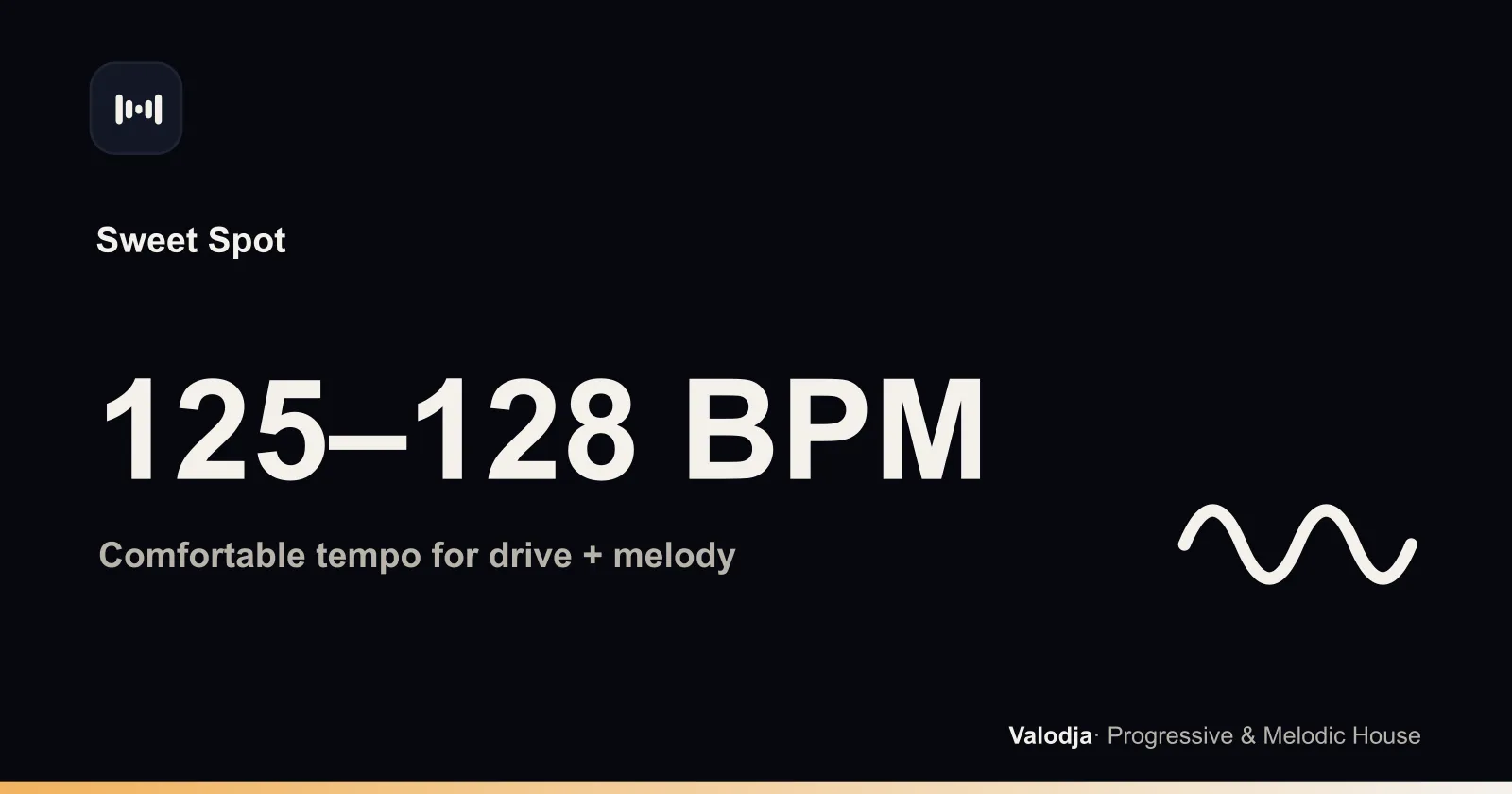
Progressive house tracks typically sit in the 120–130 BPM range, with a practical sweet spot around 125–128 BPM — fast enough to move yet roomy for long builds. This guide explains why tempo matters for listener flow, how to measure BPM, and where to find progressive house across Spotify, YouTube, SoundCloud and label pages — so you can follow and save the best playlists. It’s a straight, listener‑friendly roadmap to bpm for progressive house music.
Intro: Quick answer and what this guide covers
If you want the short answer: the bpm for progressive house music usually lands between 120–130 BPM, with a practical sweet spot around 125–128 BPM. That tempo is quick enough to feel momentum, yet relaxed enough to leave space for long, evolving builds and melodies. Below, I explain why tempo matters, how to measure it accurately, and where to listen — including Spotify, YouTube, SoundCloud and label pages — so you can save the right playlists and enjoy sets that flow.
What this guide covers in plain language:
- What “BPM” means here, plus the progressive house tempo range and sweet spot.
- Why tempo shapes the listener experience and DJ flow (energy, builds, mixing).
- How to measure BPM: tap tools, DJ software, DAW and BPM Analyzer apps.
- How to find BPM on Spotify, YouTube and SoundCloud (with search phrases).
- Where to listen: algorithmic and human playlists, label channels, and continuous mixes.
- Practical templates: copy‑paste playlist keywords, two quick-reference tables, and downloads (progressive-house-bpm-cheatsheet.pdf and playlist-bpm-tracker.xlsx).
I write this as a working producer & DJ who sequences progressive, melodic & deep/organic house for marathon listening. The aim is simple: help you pick the right tempo and find the best places to listen.
What is the BPM of progressive house? The short, practical range
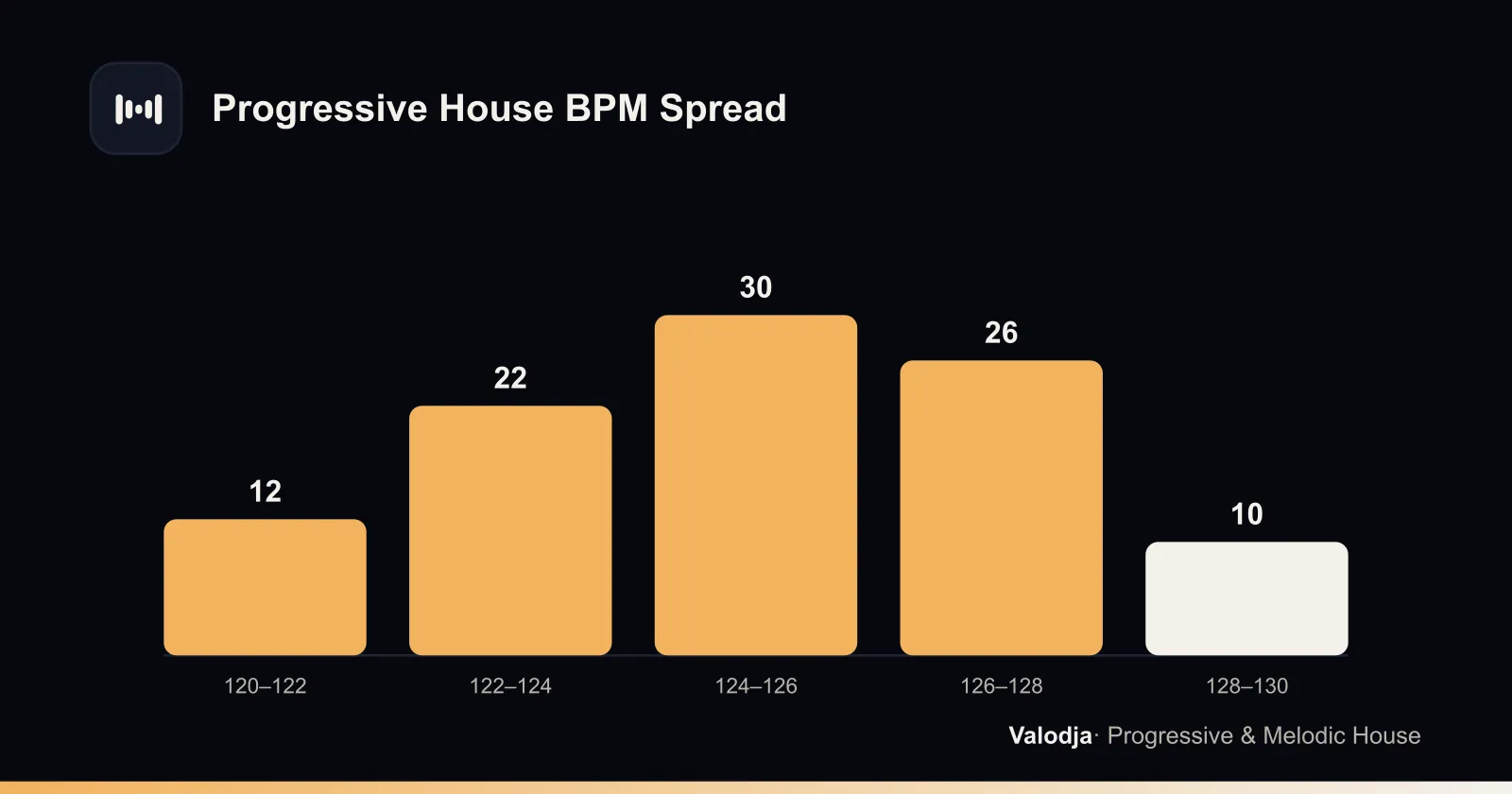
The progressive house bpm range most listeners encounter is 120–130 BPM. In day-to-day listening and DJ flow, the sweet spot is often 125–128 BPM. That middle lane balances drive with room for melody, arps, pads and evolving arrangement — a hallmark of progressive structure.
Nuance matters: tempo isn’t a hard rule. Some deeper or more organic‑leaning progressive tracks sit closer to 120–124 BPM, while peak‑time or tech‑tinged cuts can touch 128–130 BPM. If you scan a few popular playlists and label samplers, you’ll see most tracks falling into that mid‑120s corridor.
Why tempo matters for listening and DJ flow
Tempo sets how the groove breathes. In progressive house, a moderate BPM lets long builds unfold without rushing. Here’s why that helps:
- Energy: Around 125–128 BPM, the groove feels propulsive without turning frantic. Kicks and bass move the body; percussion has space to swing.
- Builds: Progressive tracks rely on layers, tension and release. A mid‑tempo gives space for motifs to develop over multiple 16‑ or 32‑bar phrases.
- Mixing: For DJs, mid‑120s keeps transitions smooth. You can ride two tracks longer, tease elements, and shape the set’s arc with subtle ups/downs.
- Listener experience: Slightly slower (120–124) leans meditative and deep — great for focus or a morning drive. Slightly faster (128–130) pushes toward peak-room energy, ideal for a late‑night lift.
How progressive house tempo compares to related genres
House and its neighbors overlap. Think tempo comparison as a guide, not a fence:
- Melodic house: Commonly 120–126 BPM. Emphasis on hooks and harmony; overlaps heavily with progressive.
- Deep house: Often 118–124 BPM. Laid‑back swing and warmth, closer to a lounge‑to‑club bridge.
- Organic house (downtempo/afro‑leaning variants): Frequently 110–122 BPM. Hand percussion, acoustic textures; slow to mid.
- Trance: Typically 130–140 BPM. Faster pulse, bigger supersaw leads; still shares long‑form builds.
- Techno: Broad, often 125–135 BPM for modern club tracks. Straighter rhythms and starker textures; half‑time counting can read 70 if the grid divides.
The important overlap: progressive house sits between deep/organic and peak‑time trance/techno, which is why you’ll find so many great mixes flowing from 122 up to 128 BPM over an hour or two.
Progressive house vs melodic, deep and trance — quick table
Below is a compact cheat sheet you can copy. It highlights BPM ranges, structural differences, and where they intersect with progressive.
| Genre | Typical BPM | Signature traits | Overlap with progressive |
|---|---|---|---|
| Progressive house | 120–130 | Long builds, evolving layers, tension/release | Core subject |
| Melodic house | 120–126 | Strong melodic hooks, warm harmonies | High (structure + tempo) |
| Deep house | 118–124 | Laid‑back swing, soulful textures | Moderate (lower tempo, vibe) |
| Organic house | 110–122 | Hand percussion, acoustic colors | Moderate (lower tempo side) |
| Trance | 130–140 | Faster pulse, big leads, euphoric breaks | Moderate (structure, faster) |
| Techno | 125–135 | Straight groove, minimal motifs | Partial (upper‑tempo edge) |
Note on naming: “Progressive” primarily refers to structure and evolution across a track or set, not just to tempo. Two tracks at 126 BPM can feel different if one unfolds gradually while the other hits immediately.
How to measure BPM: tools and quick methods
You don’t need studio gear to get accurate BPM. Try these listener‑friendly options first:
- BPM tap apps (mobile): Open a tap‑tempo app and tap along for 20–30 seconds. Average it out; ignore the first few taps while you lock in the groove.
- DAW tap/analysis: If you own the track, pull it into a DAW and use tap or detect tempo. Most DAWs let you fine‑tune by nudging grid markers until kicks align.
- BPM Analyzer apps: Tools like MixMeister or similar BPM Analyzer utilities can scan local files in bulk. Use them for your purchase library.
- DJ software: Rekordbox, Serato, Traktor and others detect BPM and grid. Let the software analyze, then manually correct if a track is half‑ or double‑counted.
- Website BPM counters: Good as a quick check if you can’t analyze locally. Tap for at least 20–30 seconds to stabilize the reading.
Tips for trickier tracks:
- If percussion is sparse, count the main kick and ignore decorative fills. You can also count eight bars and use a timer, then infer BPM.
- Half/double errors: If an analyzer shows ~63 BPM for a clear house track, it likely meant ~126 BPM. Likewise, 250 means ~125 doubled.
- Re‑check during breakdowns: Tempo doesn’t change, but analyzers sometimes wobble in long breakdowns. Measure during steady groove sections.
How to find a track’s BPM on Spotify, YouTube and SoundCloud
Each platform reveals tempo in different ways. Here’s how to find BPM without guesswork:
- Spotify: Native listener apps don’t show BPM, but playlist titles and descriptions often include it. Try Spotify search terms like “progressive house 125 BPM” or “progressive house 128”. Third‑party analysis tools can read your library’s audio features (including BPM) if you grant access. Artist Radio and playlist radios surface similar‑tempo tracks once you seed them.
- YouTube: Search for “Progressive House mix 125 BPM” or “deep progressive mix 120–126 BPM”. Many uploaders include BPM in titles or video descriptions, plus tracklists and time stamps you can skim.
- SoundCloud: Check the track’s metadata and comments. Reposts from curators can hint at style and speed; some label uploads include BPM in the description. Search tags like progressive, melodic, deep and include a number (e.g., 126) to filter results.
Copy‑paste tip: enter “Progressive House 125 BPM” directly on each platform. On YouTube and SoundCloud especially, that can pull up focused mixes and tracks.
Where to listen: streaming platforms and playlist types
Different platforms shape how you discover and enjoy progressive house:
- Spotify playlists: Great for following curators and saving individual tracks. Algorithmic mixes (Discover Weekly, Release Radar, Daily Mix) react to your saves and skips. Human/curator playlists often label tempo ranges in titles.
- YouTube mixes: Continuous mix videos and live sets are ideal for a set‑like arc at a steady BPM. You can let them run while working, driving or training.
- SoundCloud repost networks: Label pages and curator accounts repost favorites, exposing a web of related tracks and BPMs. Curated sets can act like playlists.
- Label channels: Following a progressive house music label’s page (e.g., historic examples like Anjunadeep or Bedrock) helps you catch cohesive releases often clustered around certain BPM ranges.
- DJ mix shows: Weekly and monthly shows on platforms like YouTube and SoundCloud can lock into a consistent 122–128 BPM pocket for an hour or more.
Format advantages for BPM hunting:
- Algorithmic playlists: Seamless for saving, but BPM info is indirect. Use your ears and third‑party analysis to confirm.
- User/curator playlists: Often include “125 BPM” or “128” in titles. Easy to browse and follow.
- Continuous mix: Best for immersion at a stable tempo. Tracklists/time stamps speed up BPM checking.
- Label channels: Cohesive curation; useful for building a library that “sits together” around a range.
Spotify playlists: how to find BPM-specific progressive house lists
Use Spotify search strings that combine genre + number:
- Search “progressive house 125 BPM” and “progressive house 128” to find tempo‑tagged lists.
- Try “melodic progressive 126” and “deep progressive 122–126” for nuanced pockets.
- Open a promising list, then follow playlist if it stays in your preferred band. Save standouts so algorithmic radios learn your taste.
- Use artist radio and “Fans also like” to expand around a style while roughly preserving tempo. This helps build sessions from 122 up to 128 without jarring jumps.
If you see my author playlists (including the melodic-house-for-focus concept), you can follow them and keep an eye on BPM‑friendly sequencing.
YouTube channels and mixes: what to look for
- Read the video title and description: Many include “125 BPM” or a range. Look for a full tracklist, then jump via time stamps to sample energy at different points.
- Prefer channels that consistently provide tracklists, clean audio, and clear descriptions. Subscriber counts and comment quality help gauge reliability.
- Search phrases: Try “YouTube mix progressive house 125 BPM”, “Progressive house mix 125 BPM”, and “deep progressive mix 120–126 BPM”. The exact number steers you toward your preferred intensity.
SoundCloud and label pages: finds and follow tactics
- Start with labels and curators: Search for progressive and melodic tags, then check reposts and curated sets. Reposts map scenes quickly.
- Sort label pages by newest releases to skim direction and speed. Release descriptions sometimes include BPM.
- Explore progressive house music soundcloud queries that pair genre + number (e.g., 126). Also try progressive house music label searches to surface catalogs.
- For longstanding references, examine labels known for progressive and melodic output (for example, Anjunadeep, Anjunabeats, Bedrock) and check release pages and tags to understand typical tempos. Treat them as guideposts rather than limits.
Where to buy and follow labels, releases and artists
If you like to own music or want explicit BPM in metadata, shops help:
- Beatport: Genre pages and release pages typically show BPM for each track, alongside key and previews. Great for targeted buying by tempo.
- Bandcamp: Not all releases list BPM, but label pages and liner notes can reveal intent and style. Following artists and labels keeps your feed relevant.
- iTunes stores: Useful for purchasing favorites; BPM may not be visible, but library tools can analyze.
- Label shop: Many labels sell direct via their websites. Look for release pages, genre tags and any BPM notes.
Following vs buying:
- Buy tracks when you want full control and offline analysis for precise BPM.
- Follow artists and labels on streaming to keep a flowing, auto‑updating library.
Search phrases and curated playlist examples to try
Use these copy‑paste queries across platforms. They are tuned for fast results:
- progressive house 125 bpm
- progressive house 128
- melodic progressive 126 bpm
- deep progressive mix 120–126 bpm
- Progressive House mix 125 BPM
- YouTube mix progressive house 125 BPM
- progressive house music youtube
- progressive house music soundcloud
- progressive house music label
- focus progressive 122–124 bpm
- peak progressive 127–129 bpm
- trance‑progressive 128–132 bpm
How to build a listening session by tempo and energy
Sequence your session so it breathes. A reliable arc looks like this:
- Settle in (120–123 BPM): Start with deeper, atmospheric cuts. Keep percussion light. This anchors your ear to the groove.
- Build gradually (123–126): Add tracks with more percussion detail and bass movement. Let melodic motifs recur so it feels continuous.
- Hit the sweet spot (125–128): Spend most of your time here. It’s where progressive house balances energy and space for long phrases.
- Optional push (128–129): One or two peak‑energy selections can lift the room without breaking the vibe.
- Float down (123–125): Ease the pressure with warmer harmonies or fewer percussive accents.
Beatmatching basics for smooth listening, even without decks:
- Keep jumps small: Move in 1–2 BPM steps track to track. Even passive listening feels smoother.
- Use breakdowns: Transition near breakdowns to hide mix points; the shared atmosphere masks tempo shifts.
- Mind key and mood: Same BPM can feel different if harmonic tension spikes. Keep keys compatible when possible.
First‑hand sequencing notes (principle you can copy): In club‑style sets, I often route 124 → 126 → 127.5 → 125 for a late‑set breather, then finish around 126–127. The upward slope creates lift, the brief dip resets ears so the finale lands with more impact. You can do this at home: pick four tracks within 120–130, sort by BPM, and allow one small valley before the last peak.
Resources: tools, playlists and pages to bookmark
Quick‑use resources you can save for repeat listening and BPM checks:
- BPM analyzer: A mobile tap‑tempo app plus a desktop analyzer (e.g., MixMeister‑style BPM Analyzer) cover 99% of listener needs.
- Label discovery: Browse label pages for progressive, melodic and deep/organic house, skim recent releases, and note typical BPM ranges.
- Author playlists: Follow the author’s progressive/melodic playlists to get steady mid‑120s sequencing.
- Bookmark: Your preferred Spotify search strings, YouTube mix channels that post full tracklists, and SoundCloud label/curator pages.
Downloads to make this easier:
- progressive-house-bpm-cheatsheet.pdf — printable ranges and sequencing arcs.
- playlist-bpm-tracker.xlsx — a simple spreadsheet to log tracks, BPM, key and notes.
Two quick‑reference tables you can copy now:
-
Genre tempo comparison (recap) | Genre | Typical BPM | Traits | |---|---|---| | Progressive house | 120–130 | Long builds, evolving layers | | Melodic house | 120–126 | Hooks, warm harmonies | | Deep house | 118–124 | Laid‑back swing | | Organic house | 110–122 | Hand percussion, acoustic colors | | Trance | 130–140 | Faster, euphoric leads | | Techno | 125–135 | Straight groove, minimalism |
-
Platform BPM lookup — where to check and how reliable | Platform | Where BPM appears | Reliability | Pro tip | |---|---|---|---| | Spotify | Playlist titles/descriptions; third‑party analysis | Medium | Search “progressive house 125 BPM”; use artist radio to keep tempo stable | | YouTube | Video titles/descriptions, tracklists, time stamps | High (when listed) | Filter by “mix 125 BPM” and skim timestamps for quick sampling | | SoundCloud | Track metadata, comments, repost chains | Medium‑High | Follow labels/curators; check repost networks for consistent ranges |
Conclusion and quick next steps (follow, save, listen)
To recap: bpm for progressive house music typically sits at 120–130 BPM, with a listener‑friendly sweet spot around 125–128. Use tap apps or analyzer tools for quick checks, and search playlist titles and mix descriptions to lock into the tempo you like. Spotify excels at following and saving, YouTube at continuous mixes with tracklists, and SoundCloud at label‑driven discovery.
Next steps:
- Follow on Spotify so new progressive and melodic sequences land in your feed.
- Save a few mid‑120s playlists and mixes for daily listening.
- Try the copy‑paste searches, then log your favorites in playlist-bpm-tracker.xlsx.
- Print the progressive-house-bpm-cheatsheet.pdf and keep it near your setup.
Enjoy the long builds and the mid‑tempo glow — it’s where progressive house thrives.
FAQ
- What is the BPM of progressive house?
- Progressive house is typically 120–130 BPM, with a common sweet spot around 125–128 BPM. Treat this as a practical guide, not a hard rule, since substyles and sets vary.
- What is the ideal BPM for house music?
- House overall spans roughly 115–130 BPM. The “ideal” BPM depends on subgenre and energy: deep/organic often 118–124, classic/progressive 120–130, peak‑time around 126–128.
- Is all house music 128 BPM?
- No. While 128 BPM is popular for dance tracks, house and progressive house cover wider ranges. Deep/organic can be closer to 118–124, and progressive often 120–130 BPM.
- Is techno 70 BPM or 140?
- Both readings can be valid: 70 BPM is the half‑time of 140 BPM. Many techno tracks are felt around 125–140 BPM; half‑time counting can show exactly half the value.
- How can I find the BPM of a progressive house track on Spotify, YouTube or SoundCloud?
- Use BPM‑analyzer apps for files you own; on YouTube, check titles/descriptions and timestamps; on SoundCloud, scan comments and metadata. On Spotify, search playlist titles and use third‑party analysis. Each platform has limits for native BPM display.