Progressive house festival: what to expect at shows

TL;DR
A progressive house festival centers on long, melodic DJ sets, layered builds, and immersive lighting. Expect multiple stage types—mainstage, melodic/terrace, sunrise/afterhours—a focused, dancing crowd, and strong production. This guide explains stages, the crowd at night, progressive house music performance details, and how to pick the nights and stages that match your taste.
Intro — why progressive house at festivals feels different
A progressive house festival feels different from a generic EDM mainstage because it prizes long-form flow, patience, and atmosphere. As a listener, you’re signing up for sets that climb in small steps, reward attention, and land emotional payoffs rather than constant drops. The pacing lets you sink into a groove, watch the space change with the lights, and feel the crowd tighten together as the arc unfolds.
Note from the decks: I’m a producer & DJ who plays progressive and melodic house. Festival sets that give me time to build—without rushing—are the ones where the floor truly breathes with the music.
What ‘progressive house’ means at a festival (short definition & history)
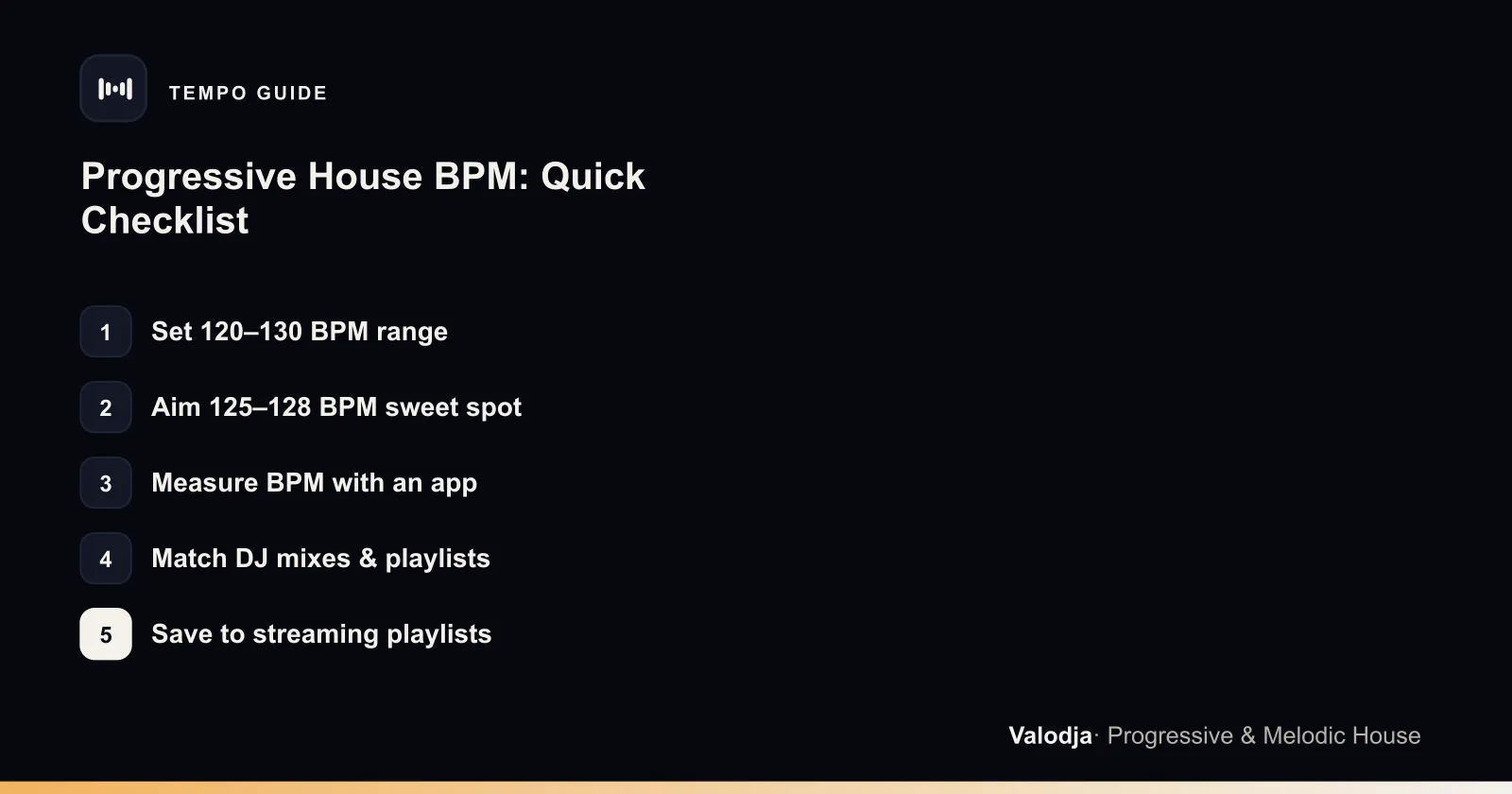
Progressive house at festivals means rolling grooves (often 120–128 BPM), melodic builds that layer over minutes, and transitions that feel like chapters rather than jump cuts. You’ll hear evolving motifs, tension that accumulates through filters and percussion, and peaks that earn their applause. These are the stylistic elements that make festival progressive house immersive rather than explosive.
The short origin story: progressive house grew from house and trance-adjacent ideas—longer arrangements, slow development, melody-forward textures—adapted for bigger rooms and outdoor spaces. On a festival stage, that translates into elongated builds, fewer “hard resets,” and a steady, inclusive pulse.
How a progressive house festival is structured
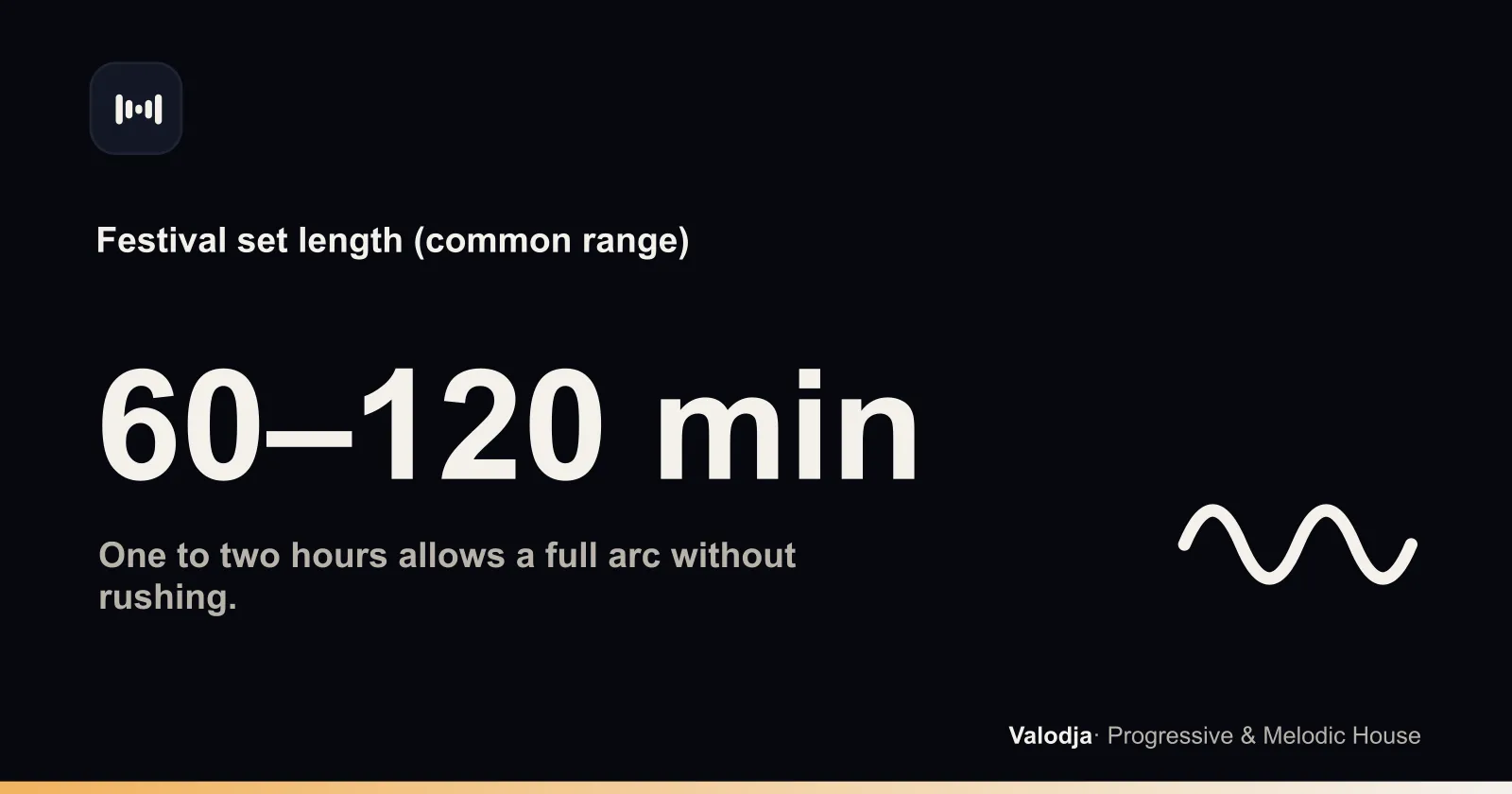
From a listener’s viewpoint, festivals typically run multiple stages in parallel, with a schedule that stretches from afternoon into late night. Set length varies by slot and stage, but one to two hours is common, giving room to develop a narrative without sacrificing variety. The result is that festival progressive house can sound different on each stage, tuned to context: radiant on the mainstage, intimate on a terrace, hypnotic at sunrise.
Key takeaways:
- Stages: expect at least one large stage plus 1–3 specialty areas.
- Schedule: overlaps are normal; plan for partial sets and deliberate choices.
- Set length: headliners often get the longest windows; earlier slots are tighter.
- Variation: the same DJ may play deeper on a side stage and punchier on the mainstage.
Stage types: mainstage, melodic/leftfield, sunrise and afterhours
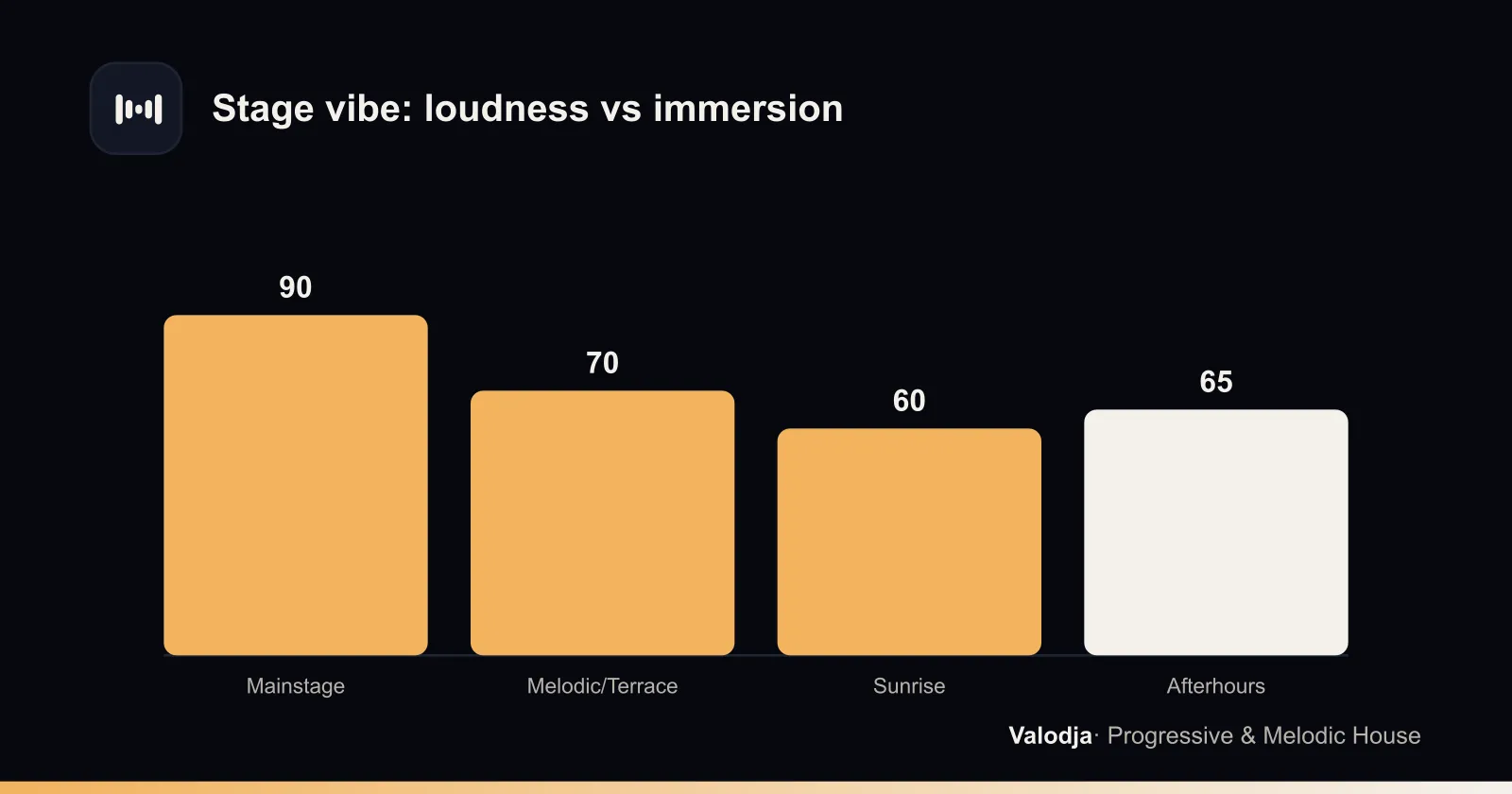
A progressive house festival stage can be a few different things, and each one nudges the music. Below is a listener’s map to help you pick your path quickly.
| Stage type | Vibe & energy | When to go | What you’ll hear | Best if you want |
|---|---|---|---|---|
| Mainstage | Big, bright, louder, show-driven | Sunset to peak night | Melodic builds with larger drops, tighter edits | Spectacle, broad anthems, crowd waves |
| Melodic/Terrace | Warm, detailed, layered | Late afternoon to late night | Longer transitions, deeper cuts, storytelling | Flow, nuance, close dancing |
| Sunrise | Dreamy, softer, slower-feeling | Pre-dawn to post-sunrise | Gentle climbs, warm pads, patient peaks | Emotional release, fresh air moments |
| Afterhours | Darker, hypnotic, heady | Post-peak to early morning | Minimal vocals, percussive development | Locking into a tunnel of groove |
Tip: If you want a sweeping, communal moment, aim for mainstage at golden hour. If you want to savor details, find the melodic/leftfield corner. For the first light tears-in-the-eyes feeling, sunrise is the bet. For meditative stamina, afterhours wins.
Crowd and atmosphere: what to expect at night
The progressive house festival crowd skews attentive and dance-focused. People face the booth, but they’re not only watching the DJ—they’re listening for patterns, following chord tensions, and saving their voices for the peak. At night, the atmosphere turns more immersive: the floor tightens, chatter drops, and you can feel waves move through the group as builds crest and release.
Safety and respect in short:
- Give space. Progressive grooves invite small, consistent movement; avoid shoving.
- Hydration matters. Keep water flowing and check in with friends.
- Earplugs belong in your pocket—and your ears when needed.
- Respect the arc. If you cut across the floor, do it between transitions.
Note from the decks: A clear sign the room is “locked in” is when the crowd stops bouncing in place and starts swaying together on eighths and quarters—fewer phones up, more eyes closed.
Festival crowd differences: night vs day
Daytime progressive sets feel social and exploratory. Night leans inward and more emotional. If you crave goosebump moments, follow the darkness.
| Time | Feel | Crowd behavior | Peaks |
|---|---|---|---|
| Day | Open, scenic, mixed audience | More movement between stages, group chats, casual listening | Brighter, more frequent payoffs |
| Night | Focused, immersive, united | People settle, follow builds, react together to releases | Fewer, bigger climaxes with longer tension |
If your goal is an “emotional” experience, target late-evening into night and carry through to the last 20 minutes. That’s when the festival progressive house crowd coheres into a single pulse.
Sound systems, production and lights — the sensory side
Production shapes how you hear progressive house. A well-tuned sound system reveals the quiet details in a long mix: the way a hi-hat opens across eight bars, or how a filter swell lifts a pad into a chorus. Big PAs give bass weight to slow builds, while clean tops let arpeggios sparkle without fatigue.
Lights and visuals do more than look cool—they pace the story. Designers often hold back during intros, then widen beams and color fields as the energy rises. At the drop, sweeping lights track the crowd’s release; during breakdowns, dimmer palettes reset your ear. You’ll notice strobes tighten to punctuate rhythmic shifts and LED walls echo melodic themes.
Expect coordinated cues: the progressive house dj festival crowd lights often sync to builds and peaks. That sync supports the “listen with your body” feeling, especially on stages that embrace long-form flow. Visuals don’t have to be loud; a graceful dim-out before a bass return can hit harder than a blast of white.
Progressive house DJ performance at festivals
A progressive house music performance at a festival is a two-way negotiation: the DJ sculpts a path, and the floor gives continuous feedback. On big stages the craft is about scale—broad gestures, registers that read at distance, and a mixdown that survives open air. On smaller stages it’s about micro-moves: evolving percussion, melodic callbacks, and precise EQ cuts that let transitions breathe.
Festival constraints—fixed set times, tight changeovers, the need to earn attention in minutes—push DJs to balance patience with punch. Great sets feel inevitable even when you don’t know the tracks; you sense the arc rather than noticing the seams.
Set structure: builds, mixing approach and IDs
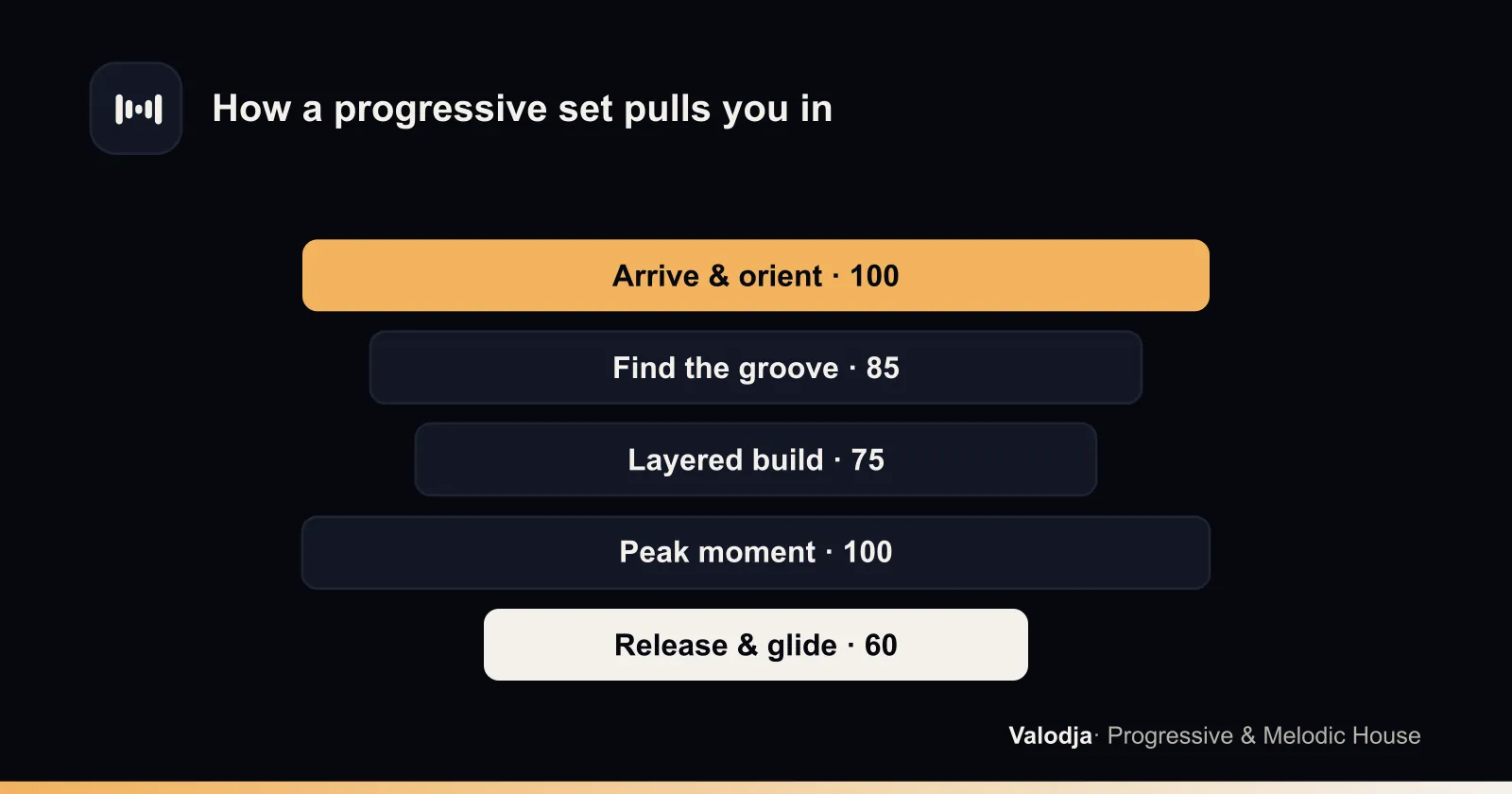
Think of a strong set structure as five acts:
- Arrival: stake the tempo and mood; less is more.
- Locking the groove: firm up percussion, open the stereo field.
- The climb: layer motifs; tease the “answer” chord; filter pressure.
- Peak: a single clean statement, then room to breathe.
- Landing: a glide path or a final twist before close.
Mixing approach: long blends that share musical DNA, key-aware transitions, and tension through EQ rather than volume. Instead of hard cuts, many DJs sculpt two tracks into one evolving texture.
IDs—those unreleased or hard-to-find tracks—often appear at peaks or as glue records that stitch two sections together. In a festival context, an ID can be a signature moment that ties a DJ’s identity to the night.
Downloadable resource: Set Structure & Listening Guide (DOC) — a simple worksheet to note where each act landed in a set you loved.
How to choose which nights and stages to follow
When the lineup drops, scan for clues:
- Look for “extended set” notes—more time favors progressive sets.
- Keywords like “melodic,” “sunrise,” “afterhours,” or “terrace” point to styles that suit long builds.
- Cross-check schedule overlaps; a melodic/leftfield stage at dusk may be the sweet spot.
- If you value a single emotional arc, commit to one stage for at least 45–60 minutes.
- Ask trusted friends and communities for recent set notes—crowd context matters.
Cheat sheet terms on a lineup or stage description that often deliver: extended set, sunrise, melodic, afterhours, terrace, progressive. That’s your shortlist for a progressive house festival.
What to bring and how to listen — practical tips for fans
Comfort and intention make the music land better. A small plan goes a long way.
- Earplugs: carry quality reusable ones so you can hear details without fatigue.
- Hydration: drink steadily; add a short water-and-breath break every 45–60 minutes.
- Shoes: low-profile, grippy, and light—progressive grooves reward steady feet.
- Layers: night air swings; sunrise can be cool even after a hot day.
- Phone use: capture one peak, then pocket it—follow the arc with your ears.
- Listen actively: notice how percussion tightens, how chords resolve, how the room reacts.
- Notes: jot a lyric fragment or melodic hint if you want to find a track later.
Downloadable resource: Festival Night Checklist (PDF) — a one-pager you can save to your phone.
Prep playlists & listening: how to get ready (Spotify playlist suggestion)
Warm up your ears to long-form structure before you arrive. Queue a house-length practice session with extended or album versions so you can hear full intro/outro sections and how tension breathes.
- Start with a gentle 15-minute climb, then hold a steady groove.
- Add 1–2 emotional peaks, spaced by at least 10 minutes.
- Finish with a smoother piece that lets you land.
Two playlists to make it easy:
- melodic-house-for-focus — deeper, patient builds for terrace and sunrise prep.
- late-drive — a tighter, driving arc that suits mainstage or prime-night energy.
Once you’re on site, give your chosen stage a full arc: arrive mid-set, stay through the peak, and land with the last track.
How progressive house festivals differ from melodic techno, trance and big-room
Here’s a quick comparison listeners ask for when weighing stages. It’s about feel, not gatekeeping—use it to pick your moment.
| Attribute | Progressive House | Melodic Techno | Trance | Big-room |
|---|---|---|---|---|
| Energy profile | Rolling, mid-to-high, sustained | Tense, hypnotic, mechanical drive | Uplifting, peak-chasing | Punchy, explosive, drop-led |
| Tempo feel | Steady, unhurried push | Persistent, motor-like | Faster, soaring | Mid-to-high with sharp impacts |
| Set structure | Longer arcs, fewer hard resets | Long arcs with darker tension | Frequent breakdowns and big lifts | Shorter loops to frequent drops |
| Crowd vibe | Focused, swaying, eyes-up | Zoned-in, heady | Hands-up, vocal responses | Jumping, chant-friendly |
| Visuals | Sweeping, color story, gradual | Stark, contrast-heavy, moody | Bright, euphoric | Strobes, pyros, bold hits |
If you’re choosing between neighboring tents, this is the practical lens: progressive house vs melodic techno often comes down to warmth (progressive) versus tension (melodic techno), while trance is more overtly euphoric and big-room chases frequent drops.
Quick checklist for a festival night
A short, printable list you can copy to notes.
- checklist: Ticket, ID, payment, earplugs, small water bottle, light layer.
- tips: Pick a stage in advance; aim for an “arrival track” window, not just the headliner.
- festival night: Pace yourself; one peak every 20–30 minutes is plenty—save your legs.
- Breaks: Water + fresh air between arcs; reset your ears before a new stage.
- Exit plan: Meet point, phone charge, and a calm last track for landing.
Conclusion — where to go next (playlists, more reading)
If this helped, follow on Spotify to catch new mixes and the curated playlists mentioned above. Save the melodic-house-for-focus and late-drive playlists so you’re ready for the next progressive house festival night. For genre deep-dives, explore pieces that unpack progressive house vs melodic techno in more detail.
FAQ — quick answers
Below are quick, direct answers to common questions about the progressive house festival experience.
-
FAQ: What is progressive house EDM? Progressive house is a house subgenre with longer tracks, gradual tension, and melodic builds. At festivals it favors pacing and arcs over back-to-back drops.
-
FAQ: Is progressive house still popular? Yes, in the niches and stages that highlight melody and long-form sets. It varies by region and event, but it’s present on many mixed-genre lineups.
-
FAQ: Who is the best progressive house DJ? There’s no single best. Choose by how they build arcs, mix smoothly, and pick tracks that move you over time.
-
FAQ: What is a progressive house festival stage like? It can be a big mainstage with dramatic lighting or a smaller melodic/terrace space with refined sound. Expect deeper grooves and a focus on narrative.
-
FAQ: How does the crowd change at night during progressive house sets? Night tightens focus: less chatter, more shared swells. Day tends to be looser with more movement between stages.
-
FAQ: How should I prepare my playlist before attending a progressive house festival? Practice with 1–2 hour mixes using extended versions, then follow the author’s Spotify playlists for ready-made arcs.
Field notes, phrasing, and practical tips above come from my experience playing and attending festival and club sets in progressive and melodic house. The article will display publication and last updated dates, and the site’s CMS will place the Spotify embeds and downloads mentioned.
Additional phrases for search clarity: festival progressive house, progressive house festival stage, progressive house festival crowd night, progressive house dj festival crowd lights, progressive house music performance, progressive house music festival crowd.
FAQ
- What is progressive house EDM?
- Progressive house is a house subgenre built on long-form arrangements, steady grooves, and melodic builds. At festivals it often means extended-feeling sets with gradual tension and release rather than rapid-fire drops.
- Is progressive house still popular?
- Yes—progressive house remains strong at events and stages that value melody, pacing, and longer sets. Popularity shifts by region and festival, but you will find it represented at many mixed-genre lineups.
- Who is the best progressive house DJ?
- “Best” is subjective. Look for DJs who excel at long-form sequencing, smoothing transitions, and crafting emotional arcs with quality track selection. Use lineups and recent set lists to match your taste.
- What is a progressive house festival stage like?
- It ranges from large mainstage spectacles with dramatic light sweeps to smaller melodic or terrace stages with a more intimate atmosphere. Expect deeper bass on big rigs and subtler, mood-driven lighting on side stages.
- How does the crowd change at night during progressive house sets?
- At night the crowd gets more focused and immersed; people settle in to follow builds and react to peaks. Daytime can be more mixed and mobile, with casual listeners drifting between stages.
- How should I prepare my playlist before attending a progressive house festival?
- Build a 1–2 hour mix-like queue using album or extended versions to hear full structures. Note favorite IDs and builds, and follow the author’s Spotify playlists to warm up your ear for long-form flow.